

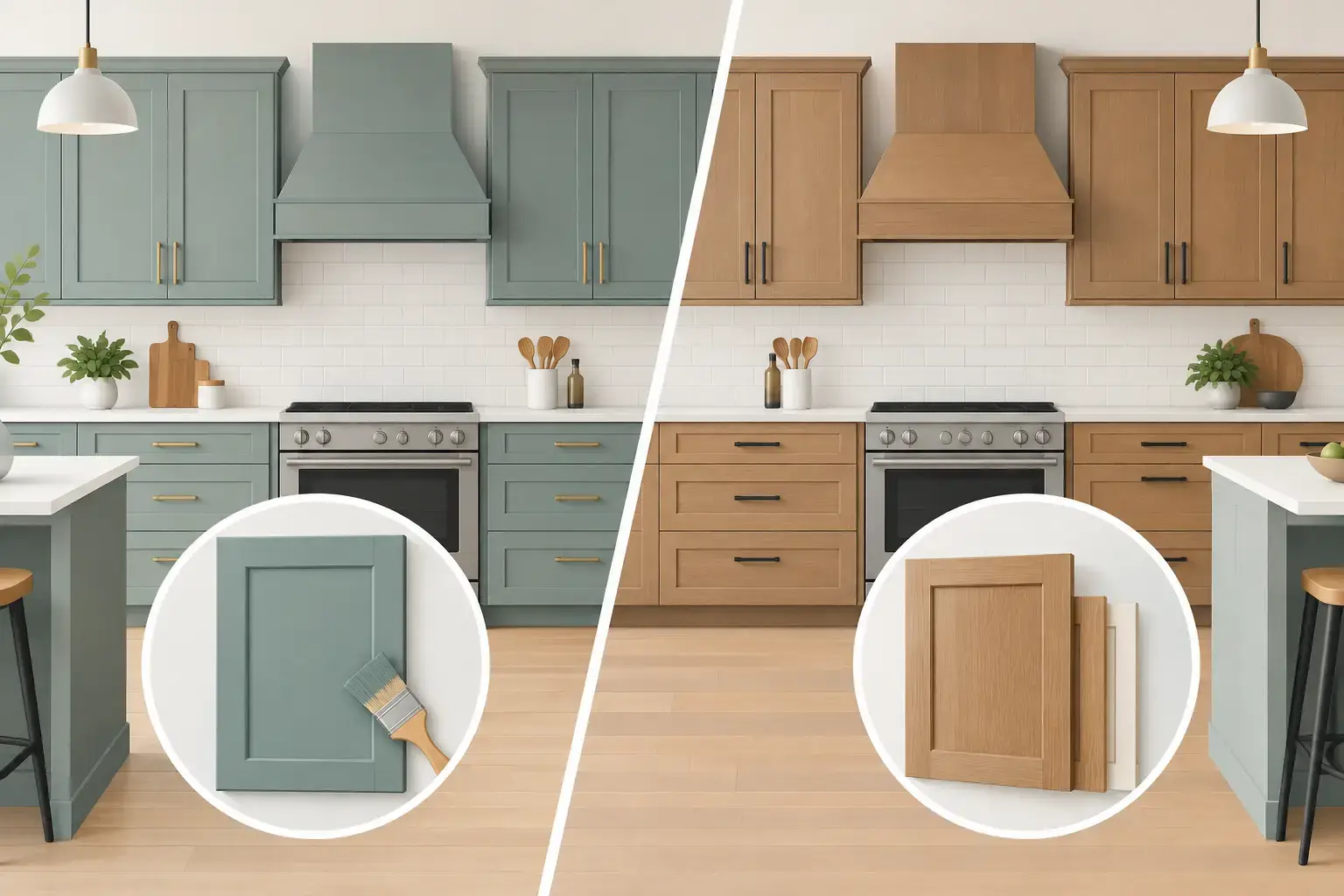
A tired kitchen does not always need to be ripped out. When deciding between painted cabinets or replacement doors, the real question is whether the existing units are still worth keeping. If the cabinet frames are solid, level and practical, a carefully planned refresh can make a major difference without the cost, mess and downtime of a full replacement.
For homeowners across St Andrews and Fife, this is often a decision about getting the best result from the kitchen they already have. The right route depends on the condition of the cabinets, the finish you want, how long you expect it to last and how much disruption suits your household.
Start with the cabinet boxes, not the doors
Kitchen doors take most of the visual wear, but the cabinet boxes determine whether a refresh is sensible. Open doors and drawers, inspect the inside of sink units, and look carefully at the base cabinets. Swelling around the plinth, soft chipboard, persistent damp or loose fixings can all point to deeper problems that paint alone will not solve.
If the units are structurally sound, open and close properly, and provide enough storage, they may be excellent candidates for improvement. Older kitchens are often built with surprisingly sturdy carcasses. Reusing them can be a practical and more cost-conscious choice, especially where the layout works well.
Replacement doors can also work with sound cabinet boxes. They give the kitchen a more substantial visual change while keeping the existing layout, worktops and services in place. However, the new doors must be accurately measured and compatible with the current hinges, drilling positions and cabinet sizes. A door that looks right on a sample can still create problems if the fitting details are overlooked.
Painted cabinets or replacement doors: the key differences
Painting is generally the better option when the doors and drawer fronts are in good condition but look dated, scratched or marked. It is particularly effective on timber or previously painted surfaces, where thorough preparation can produce a smooth, durable finish. A new colour can change the character of the whole room, from a light, calm kitchen to a darker, more traditional look.
Replacement doors are often the stronger choice when the doors are damaged, warped, heavily chipped or covered in an old vinyl wrap that is lifting at the edges. New doors can also make sense if you want a different profile, such as replacing plain slab fronts with a shaker style. Paint changes colour brilliantly, but it cannot turn a flat door into a detailed framed design.
The difference is not simply cosmetic. Painting preserves more of the original kitchen and usually creates less material waste. Replacement doors offer more freedom over style and can remove worn surfaces that would otherwise need ongoing attention. Neither is automatically better. The best choice is the one that matches the condition of the kitchen and the finish you expect from it.
When painting your kitchen cabinets makes sense
A professionally painted finish is all about preparation. Doors, drawer fronts and visible cabinet areas need to be cleaned thoroughly to remove grease, then sanded or keyed so the coating can bond properly. Repairs should be completed before priming, and the paint system needs to suit the material underneath.
This matters because kitchens are hard-working rooms. Steam, fingerprints, cooking residue and regular cleaning all test the finish. Rushing straight to the top coat may look acceptable for a short time, but poor preparation is often what leads to peeling, chipping or patchy areas later.
Painting is a particularly good option if you like the door style and simply want it to feel current again. It can also bring mismatched elements together. For example, dated oak-toned cabinets can be repainted in a softer neutral shade, while new handles, a refreshed splashback and improved lighting complete the change without altering the layout.
There are limits. Laminate, melamine and vinyl-wrapped doors can be painted in some cases, but they demand careful assessment and the right specialist products. If a vinyl coating is already separating from the door, paint will not cure the underlying failure. In that situation, replacement doors are usually a more reliable investment.
When replacement doors are worth the extra spend
Replacement doors are not the same as a new kitchen, but they can deliver a more dramatic change than paint alone. You can choose a new colour, texture, edge detail and door profile while retaining cabinets that are still perfectly functional.
They are often worth considering where doors have swollen near sinks or dishwashers, where corners have been knocked beyond a tidy repair, or where years of use have left the finish uneven. If you are preparing a property for sale or letting, new doors can also create a clean, consistent first impression without the expense of changing every unit.
Remember that a successful door replacement may involve more than doors. End panels, plinths, cornices, pelmets and cover panels may need updating to match. Old handles can leave holes that do not align with new ones, and worn hinges may need replacing or adjustment. These are manageable details, but they should be included in the plan from the start rather than treated as last-minute extras.
Compare the cost in the right way
It is tempting to compare only the price of paint with the price of new doors. A fair comparison includes preparation, repairs, hardware, fitting, waste removal and the time the kitchen will be partly out of action.
Painting can offer strong value where the doors are sound and the existing design suits the room. It avoids buying new components and keeps the project focused on achieving a high-quality finish. Replacement doors can cost more, but may represent better value where tired or damaged doors would require extensive repair and preparation before they could be painted properly.
A full kitchen replacement becomes the better option only when the cabinets are failing, the layout does not work, or plumbing and electrical changes are already needed. There is little sense in investing in attractive fronts if the sink base is water-damaged or the storage no longer meets the household’s needs.
Think about disruption as well as appearance
Both options are less disruptive than removing a whole kitchen, but the working process is different. Painting usually involves taking doors off where possible, preparing surfaces carefully and allowing appropriate drying and curing time between coats. Your kitchen may remain usable in part, but it needs to be kept clear and clean while the work is underway.
Replacement doors involve measuring, ordering and fitting. The installation itself can be relatively quick once the doors arrive, but the lead time and the need for matching components should be factored in. If worktops, tiles or appliances have been fitted tightly around the existing doors, careful fitting becomes even more important.
The four questions that usually make the decision clearer are:
- Are the cabinet boxes dry, secure and worth retaining?
- Do you like the current door style, or do you want a completely different look?
- Is the existing surface suitable for a long-lasting painted finish?
- Would new doors also require panels, hinges, handles or other finishing work?
Choose a finish that suits daily life
A kitchen colour should work with how the room is used, not just how it appears in a showroom. Pale colours can make a compact kitchen feel more open, although they may show marks more readily around handles and lower cabinets. Deep greens, blues and charcoals can look smart and grounded, but benefit from good lighting and balanced worktop colours.
For painted cabinets, a practical washable finish is essential. The sheen level also affects the final look: lower-sheen finishes can feel softer and more contemporary, while satin finishes are often easier to wipe down and cope well with a busy family kitchen. With replacement doors, consider whether a matt, gloss or textured surface will suit the light, cleaning routine and overall style of the property.
Small details make a visible difference. Well-fitted handles, neatly finished end panels, aligned doors and clean lines around plinths are what make a kitchen refresh feel properly completed rather than simply updated.
Get an honest view before committing
A good assessment should be practical, not sales-led. Look at the condition of the cabinets, measure accurately, discuss the desired finish and identify any repairs that need attention first. This gives you a realistic picture of cost, timescale and likely result.
St Andrews BrushWorks helps local homeowners make these decisions with clear advice, tidy workmanship and careful attention to the finishing details that matter. Whether painting is the sensible route or new doors will give the better result, the aim is the same: a kitchen that looks cared for and works well every day.
Before choosing, stand back from the colour samples and inspect what is already there. A sound kitchen deserves a thoughtful refresh, and the right one can make the room feel new without creating more work than the project needs.

