

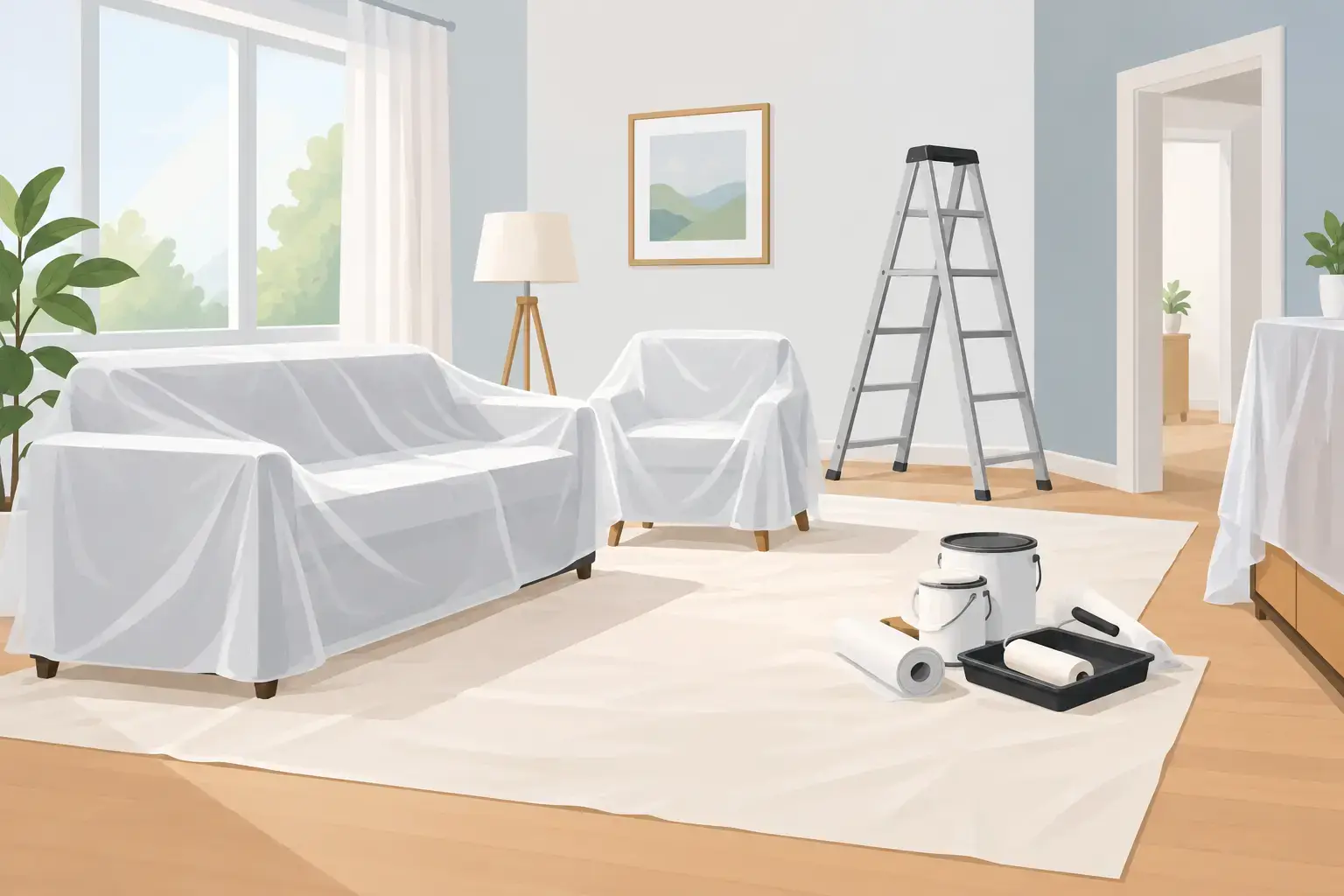
A well-prepared room gives your decorators time to focus on the finish rather than moving furniture, finding sockets or working around clutter. When you prepare rooms before decorators arrive, you help the job begin promptly, keep disruption down and give the work the best possible conditions from the first coat.
You do not need to turn your home into a building site or tackle jobs that should be left to the professionals. A few sensible steps before the agreed start date will protect your belongings, make access easier and avoid delays. This is especially useful in occupied homes, rental properties and small business premises where every day of disruption matters.
Prepare Rooms Before Decorators Arrive: Start With Access
Decorators need a clear route from the entrance to the room being painted or papered. Check hallways, stairways and landings for boxes, shoes, coats and furniture that could make carrying equipment difficult. If parking is limited outside your property, agree the most practical arrangement in advance, particularly in busy parts of St Andrews and across Fife.
Inside the room, aim to create enough space for ladders, dust sheets and safe movement around the walls. Small items should be removed completely. Larger furniture can often stay if it can be moved into the centre of the room and covered properly, but this depends on the size of the space and the work planned.
A compact box room with a bed, desk and wardrobes may need more clearing than a large lounge. If you are unsure what can remain, ask before the start date rather than making assumptions. Clear communication is the simplest way to keep the project on schedule.
Move and protect your belongings
Take down pictures, mirrors, clocks, shelves that are not fixed permanently, curtains and blinds where possible. Remove ornaments, lamps, electronics and anything stored on window ledges, mantels or side tables. This protects your belongings from dust and accidental paint marks while allowing decorators to prepare edges and surfaces properly.
Soft furnishings deserve extra attention. Curtains and fabric blinds can hold dust and absorb paint odours, so removing them is usually worthwhile. If large items such as sofas, wardrobes or display cabinets must stay in the room, clear their contents first if practical. This makes moving them safer and reduces the risk of damage.
Do not forget adjoining areas. A decorator may need to pass through a hallway or another room several times a day, so move delicate items away from the route. Keep children’s toys, pet beds and food bowls clear of the work area.
Deal With Walls, Repairs and Existing Fixtures
It is tempting to start filling every small crack before a decorator arrives. In most cases, it is better to point out damage and let the agreed scope of work guide the preparation. A professional decorator can assess whether a crack is cosmetic, whether old filler needs removing and what preparation is needed for a smooth, lasting finish.
Do tell the team about anything unusual before work starts. This includes recurring damp patches, mould, leaks, flaking paint, loose plaster, recently repaired areas and stains from smoke or water. Painting over an unresolved issue may improve the appearance briefly, but it will not fix the cause.
If you have installed new sockets, light fittings, radiators or shelving, mention this too. Newly fitted surfaces may need time to dry or settle, while fittings can affect how edges are cut in. The same applies if a room has recently been replastered. Fresh plaster should be fully dry before decoration begins, and drying times can vary with thickness, heating and ventilation.
For wallpapering or a feature wall, clear as much of the wall as possible. Wall-mounted televisions, shelving and heavy mirrors may need to come down beforehand, depending on the design and coverage. This avoids awkward joins and leaves the finished wall looking intentional rather than interrupted.
Make decisions before the first day
Choose your colours, finishes and feature-wall position ahead of time. A tester pot viewed on different walls can prevent an expensive change of mind once full coverage has started. Daylight, warm bulbs and cool LED lighting can make the same colour look very different.
If paint or wallpaper is being supplied by you, make sure it is on site before the decorators arrive and check the quantity. Keep all tins from the same colour batch together where possible. For wallpaper, retain the batch labels and order enough rolls to allow for pattern matching and cuts around windows or doors.
It also helps to decide how you would like small details handled: whether radiators will be painted, which walls are feature walls, and whether you want fittings removed or painted around. These details are easy to discuss beforehand and harder to change halfway through.
Create the Right Working Conditions
A tidy room is useful, but a workable environment matters just as much. Decorators will need reasonable lighting, power for equipment and access to water. Check that light fittings work, especially in rooms with limited natural daylight. If a room is very dark, let the team know so they can plan accordingly.
Keep the heating at a sensible, steady level during colder months unless you have been advised otherwise. Paint, filler and wallpaper paste all respond to temperature and humidity. A room that is freezing cold, overly hot or constantly damp can slow drying and affect the result.
Ventilation is also a balance. Fresh air can help with drying and odours, but wide-open windows in rain, high winds or very cold weather are not always suitable. Your decorators can advise on the best approach for the products being used.
Pets should be kept away from working areas. Freshly painted skirting boards, open paint tins and ladders are not a safe combination for curious dogs or cats. If access cannot be restricted, arrange for a pet to stay elsewhere during working hours.
Plan Around Daily Life and Business Hours
A decorating project does not have to bring normal life to a halt, but it does need a little planning. Think about which rooms are essential each day. If a bedroom is being decorated, prepare an alternative sleeping arrangement. If it is a kitchen, office or shop area, discuss the order of work so the most important spaces are unavailable for as little time as possible.
For small commercial properties, let staff know where decorators will be working and keep customers away from wet paint or equipment. Working outside opening hours may be possible for some projects, although this can affect cost and scheduling. The right option depends on the scale of the work and how much access is available.
Keep one clear point of contact available by phone during the project. Decisions occasionally arise once preparation begins, such as discovering a loose section of lining paper or a hidden stain. Prompt answers avoid unnecessary pauses and help the job move forward smoothly.
The Day-Before Check
The evening before work starts, walk through the room once more. You should have removed personal items, cleared access, confirmed the colour choices and identified any concerns that have not already been discussed.
Check these final practical points:
- Windows are accessible and curtains or blinds have been taken down where agreed.
- Furniture is removed or positioned to leave enough working room.
- Valuables, fragile items and electronics are safely stored elsewhere.
- Pets and children can be kept clear of the work area.
- Parking, entry arrangements and your best contact number are confirmed.
There is no need to provide dust sheets, ladders or specialist preparation materials unless this has been specifically agreed. A dependable decorating team will protect floors and surfaces as part of careful working practice. Your job is simply to make the space accessible and let the professionals get on with creating a finish you will be pleased to live or work with.
At St Andrews BrushWorks, clear preparation and straightforward communication help us deliver the punctual, tidy workmanship property owners expect. A quick conversation before the start date can answer the small questions early, leaving you free to look forward to the transformation rather than manage the details.

