

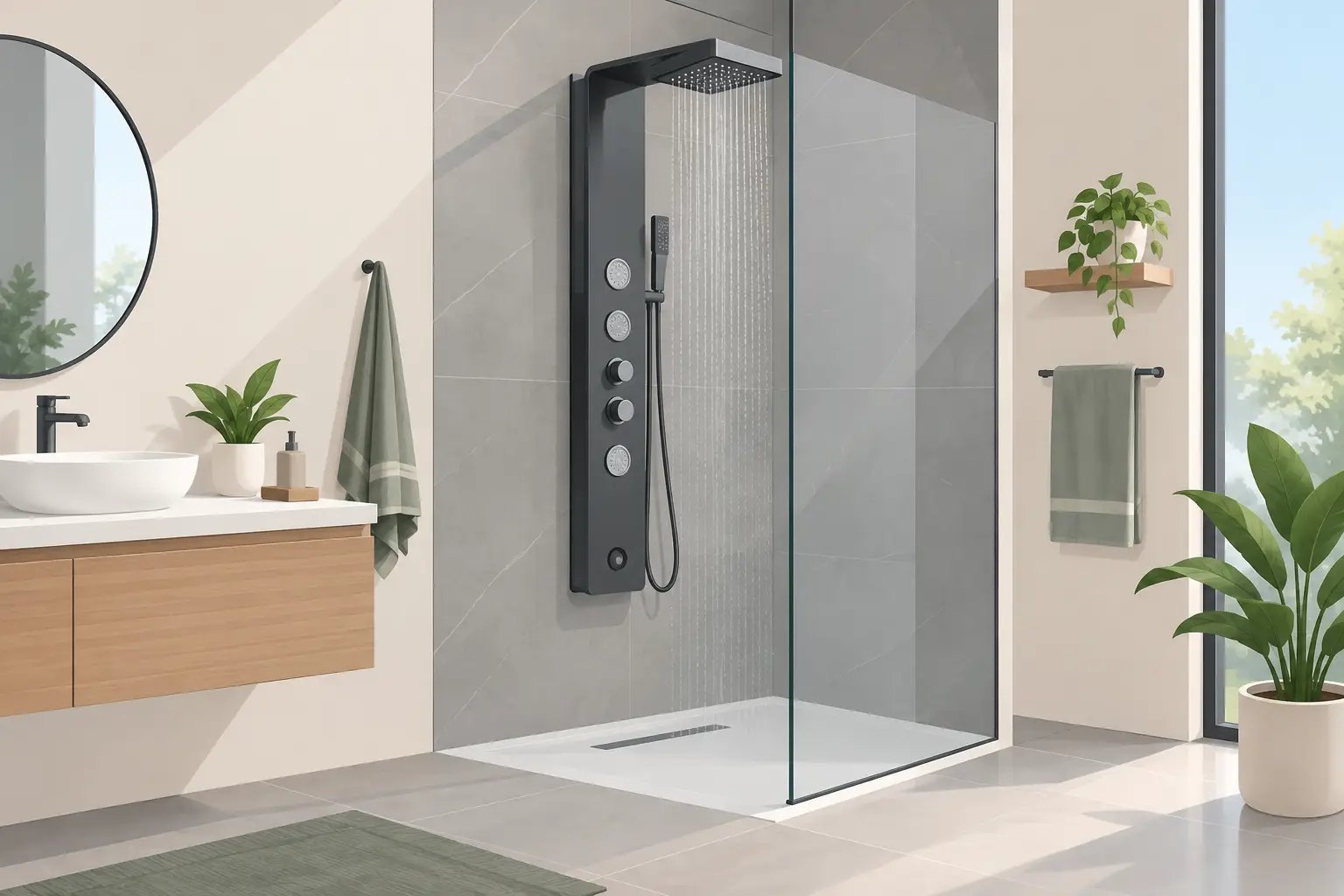
A tired shower area tends to show its age quickly. Grout darkens, sealant starts to lift, and cleaning becomes a job nobody wants. Shower panels offer a practical alternative to tiles, giving your bathroom a clean, modern finish with far fewer joints to maintain. For homeowners in St Andrews and across Fife, they can be an excellent way to refresh a bathroom without creating unnecessary disruption.
The right panel system is not simply about choosing a pattern you like. It needs to suit the room, the existing walls, the shower enclosure and the standard of finish you expect. Good preparation and careful fitting are what keep a bathroom looking smart long after the work is complete.
Why shower panels are proving popular
Shower wall panels are large, waterproof boards fitted directly to the wall around a shower or bath. Unlike a tiled surface, they use very few joins. This creates a smooth, easy-clean finish that is especially useful in busy family bathrooms, rental properties and compact en-suites.
The biggest attraction is maintenance. Tiles can look excellent, but grout needs regular cleaning and may eventually require repair. Panels remove most of that work. A quick wipe with a non-abrasive cleaner is usually enough to keep the surface looking fresh.
They can also speed up a bathroom renovation. In the right conditions, panels may be fitted over sound existing tiles, saving the mess and time involved in removing them. That does not mean every tiled wall should be covered. Loose tiles, water damage and uneven surfaces must be dealt with properly first. A tidy shortcut is only worthwhile when it still delivers a reliable result.
Choosing the right shower panels for your room
There is no single best panel for every bathroom. The right choice depends on how the room is used, the look you want and the condition of the walls behind it.
Material and durability
Most quality bathroom wall panels have a waterproof core and a decorative, hard-wearing face. Acrylic-faced panels often give a glossy, contemporary appearance, while laminate systems can offer convincing stone, marble, concrete or timber-effect finishes. PVC panels are generally a more budget-conscious option and can be suitable for lighter-use areas, although they may not provide the same solid feel as a premium board.
Look beyond the pattern sample. Ask how the edges are sealed, whether the panel is designed for full shower use, and what warranty is supplied. Water always finds the weakest point, so the full system matters: panels, trims, adhesive, sealant and the work behind them.
Finish and style
A panelled shower can be as understated or as bold as the rest of your bathroom. White gloss works well where light is limited. Soft stone effects bring a calmer, more traditional feel, while dark slate or concrete-look finishes can make a strong feature in a larger room.
In smaller bathrooms, a pale panel used across the shower walls can make the space feel less broken up than lots of individual tiles. If you prefer more character, use a patterned or marble-effect panel in the shower and keep the surrounding walls simple. This gives the room a focal point without making it feel busy.
It is also worth considering the other finishes in the room. Chrome fittings tend to suit most panel colours, while black brassware can look particularly sharp against pale stone or textured grey designs. The best results come when the shower tray, screen, vanity unit and wall finish are considered together rather than chosen separately.
Panel size and joins
Larger panels mean fewer visible joins. That is good for cleaning and creates a more polished appearance. However, big boards can be harder to handle in a tight property, particularly where access involves narrow stairs, awkward turns or an upstairs bathroom.
A professional installer will plan the layout before cutting. This is important around windows, alcoves, shower valves and pipework. A poorly placed join or an overly narrow strip at one edge can make an otherwise good bathroom look unfinished.
Preparation is where lasting results begin
A bathroom can only be as reliable as the surface underneath it. Before installation, walls should be checked for damp, movement, damaged plaster, loose tiles and old leaks. Covering over a problem may make it disappear temporarily, but it will not fix it.
Where the wall is sound and flat, panels can often be bonded directly in place. Where it is uneven or has suffered water damage, it may need boarding or repair first. This adds work at the start, but it gives the panels a stable base and helps prevent future movement.
The shower tray and enclosure need the same attention. If the tray is not level, water may sit where it should run away. If the screen is poorly sealed, water can escape onto the floor or behind the wall finish. These details are easy to overlook when a bathroom is being updated quickly, yet they are often the difference between a job that looks good on day one and one that stays dependable.
Fitting details that should not be rushed
Shower panels are often described as a quick installation option. They can be quicker than tiling, but they are not a fit-and-forget product. Accurate measuring, clean cuts and careful sealing are essential.
The boards need to sit square, with appropriate expansion allowance where the manufacturer requires it. Internal corners and panel joins should use the correct trims or jointing system, not a heavy line of sealant used to hide an uneven cut. Around mixer valves and shower heads, openings should be cut neatly and sealed correctly so water cannot track behind the panel.
Silicone also needs time to cure. Using the shower too soon can compromise the seal before it has set fully. A reliable installer will explain when the area can be used again and leave the space clean, with fittings checked before handover.
Panels versus tiles: the practical trade-off
Tiles remain a strong choice, especially for homeowners who want intricate layouts, handmade finishes or a very specific period look. They can also be repaired one at a time if a single tile becomes damaged. But they involve more joints, more cleaning and usually a longer installation process.
Shower panels are better suited to people who value a streamlined finish and straightforward upkeep. They are particularly useful for refreshing a dated bathroom, improving a rental property between tenancies, or creating a smart en-suite with minimal fuss. The trade-off is that a damaged panel can be harder to repair invisibly than a single tile, and the product choice matters more than it may first appear.
Budget is not just about the panel price. Compare the cost of materials, removal of old tiles, wall preparation, labour, trims and finishing. A cheaper board fitted over a poor surface can become expensive if it needs to be redone. Competitive pricing should still include the time needed to do the job properly.
Keeping a panelled shower looking its best
Once fitted, shower panels are simple to care for. Wipe down water marks regularly, particularly in hard-water areas, and use a soft cloth with a suitable bathroom cleaner. Avoid abrasive pads, harsh powders and strong solvents that could dull or scratch the decorative face.
Check the silicone around the tray, screen and fittings from time to time. Sealant does not last forever, especially in a shower used every day. Catching a split or lifted edge early is a small maintenance job; leaving it can allow water into places it does not belong.
A well-planned bathroom should make everyday life easier, not add another maintenance task to the list. With the right shower panels, proper preparation and careful finishing, you can achieve a clean, durable shower space that feels good to use every morning.

