

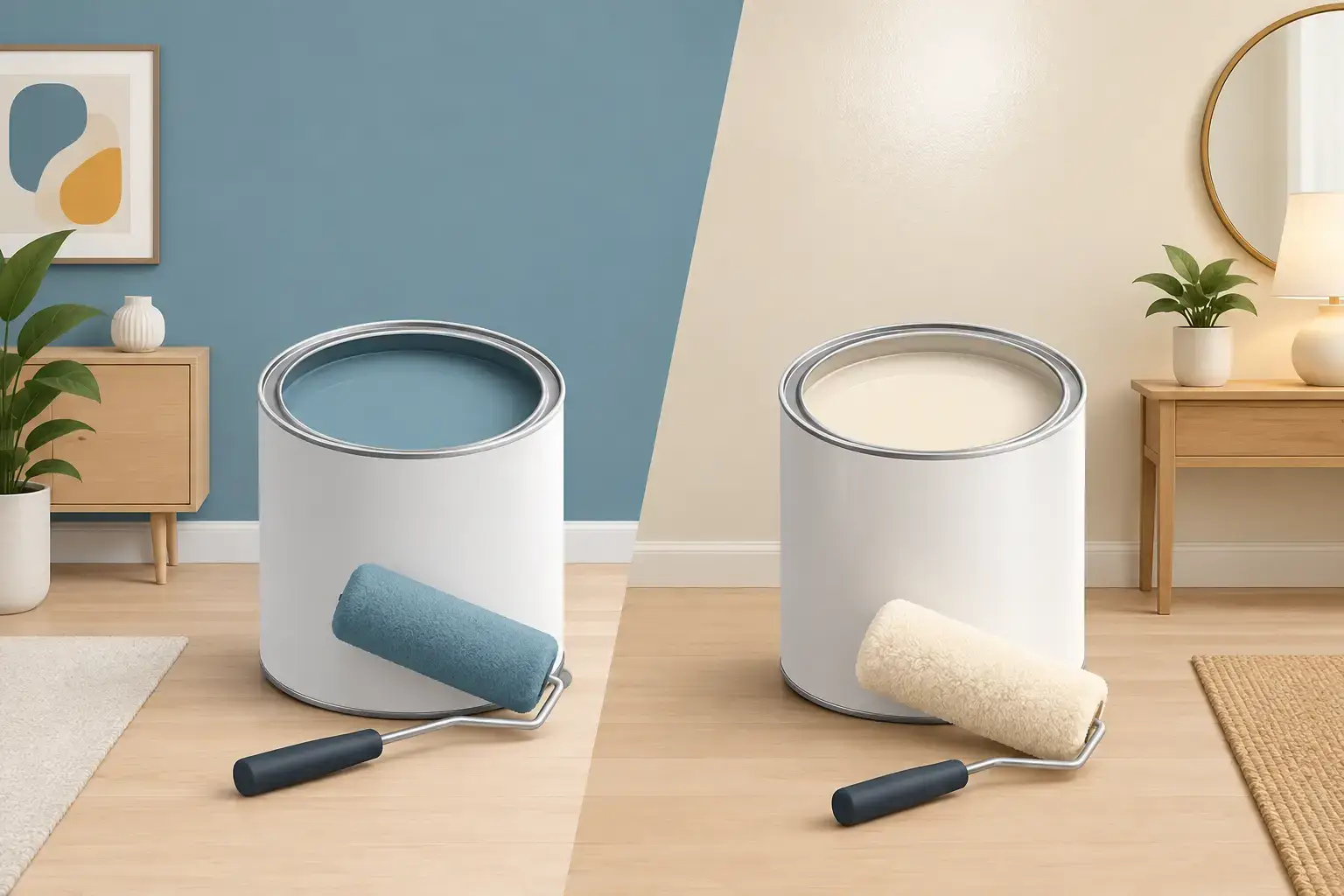
A freshly painted room can look superb on day one, then quickly show every scuff, splash and handprint if the finish is wrong for the surface. When choosing emulsion versus eggshell, the right answer is less about which paint is ‘best’ and more about where it is going, how the room is used and the look you want to achieve.
For most homes in St Andrews and across Fife, emulsion is the natural choice for walls and ceilings, while eggshell earns its place on woodwork, metal and hard-working details. There are exceptions, particularly in kitchens, bathrooms and busy family homes. Knowing the difference before painting helps you get a finish that looks smart and lasts.
Emulsion versus eggshell: the key difference
Emulsion is a water-based paint made primarily for interior walls and ceilings. It is easy to apply, low in odour and available in a wide range of colours and sheen levels, from flat matt through to soft sheen and silk. Most people simply mean wall paint when they ask for emulsion.
Eggshell is a tougher, low-sheen finish with a gentle lustre, similar to the surface of an eggshell. It was traditionally oil-based, though good water-based eggshell products are now widely used. It is commonly applied to skirting boards, door frames, internal doors, window boards, radiators and kitchen units. Some eggshell paints are also suitable for walls, but that does not automatically make them the best option.
The practical difference comes down to sheen, durability and how forgiving the paint is. Matt emulsion softens the appearance of minor surface imperfections. Eggshell reflects more light, wipes more easily and stands up better to knocks, but can draw attention to uneven plaster, brush marks or poor preparation.
When emulsion is the better choice
Emulsion is designed for broad wall and ceiling areas. A quality matt or durable matt emulsion gives bedrooms, lounges, hallways and offices a clean, even finish without a noticeable shine. It is particularly effective in older Fife properties, where walls may have slight movement, previous repairs or less-than-perfect plasterwork.
A flat matt finish is ideal where appearance is the priority and the room receives light everyday use. It gives a calm, modern look and helps hide small defects. The trade-off is that basic matt paint can mark more easily, so it may not be right for a narrow hallway used by children, pets and muddy boots.
For busier spaces, durable matt or washable emulsion is usually the more sensible investment. It keeps the soft, low-sheen appearance of matt paint while offering better resistance to scuffs and marks. This makes it a strong choice for entrance halls, stairs, landings, dining rooms and family living spaces.
In kitchens and bathrooms, choose a specialist kitchen or bathroom emulsion for the walls. These products are made to cope with condensation, steam and regular cleaning more effectively than standard emulsion. They are often less glossy than eggshell, so they retain a more understated wall finish while still being practical.
Best places for emulsion
Emulsion is generally the right fit for plastered walls, ceilings, dry-lined partitions and large feature-wall areas. It is also the easiest option when you want a precise colour match across several rooms or are planning a bold painted feature wall.
If you are painting newly plastered walls, emulsion is essential. Fresh plaster needs time to dry fully, then a mist coat made with suitably diluted water-based emulsion before full coats are applied. Painting new plaster straight away with a sealed or heavy finish can cause adhesion problems later.
When eggshell is worth choosing
Eggshell is often the best finish where walls or woodwork need more protection. Its subtle sheen is smart without being overly glossy, and it is generally easier to wipe clean than standard matt emulsion. It also gives a more refined finish to details that take regular wear.
For skirting boards, architraves, doors and window boards, eggshell is a dependable choice. These areas are regularly touched, knocked by furniture or caught by vacuum cleaners, so they need a paint that can handle more than a wall finish. A good water-based eggshell dries faster and has less smell than traditional solvent-based paint, which is helpful when work is being completed inside an occupied home.
Eggshell can also suit certain walls, especially in utility rooms, stairwells, commercial corridors or spaces where frequent cleaning is expected. However, it should be chosen carefully. On a large wall facing a window, its soft shine can reveal every patch, roller edge and uneven section of plaster. Thorough preparation is not optional.
Best places for eggshell
Eggshell works particularly well on timber, primed MDF, metalwork and previously painted trim in sound condition. It is also a practical option for interior doors, where a tougher surface makes day-to-day marks less of a concern.
In a bathroom, eggshell can be an excellent choice for the door, skirting and window board, while specialist bathroom emulsion is normally better for the main walls and ceiling. This combination gives the room a consistent look while matching each surface with a finish designed for its job.
Finish matters as much as the paint type
Paint names can be confusing because manufacturers use slightly different descriptions. One brand’s eggshell may have more sheen than another’s, while a durable matt can be far more washable than an older-style silk paint. Rather than choosing from the label alone, consider the finish you need in the room.
Matt has very little reflection and is the most forgiving finish for walls. Soft sheen has a modest lustre and can work well in kitchens, bathrooms and hallways, though it may highlight flaws more than matt. Silk is shinier again and very washable, but it can look dated or unforgiving on uneven walls. Eggshell sits in the low-sheen category and is usually chosen for trim, furniture and detailed surfaces.
Colour can change the decision too. Deep blues, greens and charcoal shades often look richer in matt or durable matt on walls. On skirting and doors, an eggshell finish can add a subtle contrast, making the woodwork look crisp without creating a high-gloss effect.
Preparation decides how long the finish lasts
The best paint will not cover loose, dirty or damaged surfaces properly. Before any topcoat is applied, walls need to be cleaned, filled, sanded and primed where necessary. Stains from water damage, smoke or nicotine may need a suitable stain-blocking primer rather than repeated coats of paint.
Woodwork needs the same attention. Flaking paint should be removed, glossy surfaces should be sanded to provide a key, and bare areas should be primed. Gaps around skirting or architraves can be filled neatly before painting, but flexible caulk is not a substitute for repairing damaged timber or movement in the surface.
This is where a professional decorating job earns its value. The visible topcoat is only one part of the result. Clean cutting-in, even coverage, proper drying times and careful protection of floors and furniture make the difference between a quick refresh and a finish that still looks good months later.
A practical room-by-room approach
For bedrooms and living rooms, choose matt or durable matt emulsion on the walls and ceiling, then eggshell for skirting, frames and doors. It is a classic combination that looks clean and is easy to live with.
For halls, stairs and landings, durable matt emulsion is usually the sensible choice because these areas take more knocks than any other part of the house. Use eggshell on the woodwork for added resilience.
For kitchens, washable kitchen emulsion is normally best on walls, with eggshell used on woodwork or suitable cabinetry. If the walls are near a cooker or sink, cleaning needs should take priority over a perfectly flat matt appearance.
For bathrooms, use specialist bathroom emulsion on walls and ceilings outside the shower enclosure. Proper bathroom-grade finishes, sealants and tiles are needed in high-splash zones. Eggshell can complete the door, trim and window boards, provided the room has suitable ventilation.
Small commercial spaces benefit from the same thinking. A tidy office may suit durable matt walls and eggshell trim, while a treatment room, salon reception or busy corridor may need a more washable wall finish. The right specification should reflect how customers, staff and equipment use the space.
Choosing with confidence
If the wall is sound, dry and not exposed to heavy wear, emulsion will usually give the best-looking result. If the surface is woodwork, metal or a high-touch detail, eggshell is often the safer option. Where you need both durability and a low-sheen wall finish, durable matt or specialist kitchen and bathroom emulsion may offer the best balance.
A reliable decorator will look beyond the colour card, assess the condition of the surface and recommend a finish that suits the room rather than applying the same product everywhere. That extra care avoids unnecessary repainting and leaves your home or business looking properly finished.

